

Psoriasis

What Is Psoriasis?

Our psoriasis treatment approach starts with understanding what causes the condition: an autoimmune response that speeds up skin cell production far beyond what’s normal. Instead of shedding over the usual month-long cycle, new skin cells form in just days, causing older cells to pile up on the surface.

Signs and Symptoms of Psoriasis

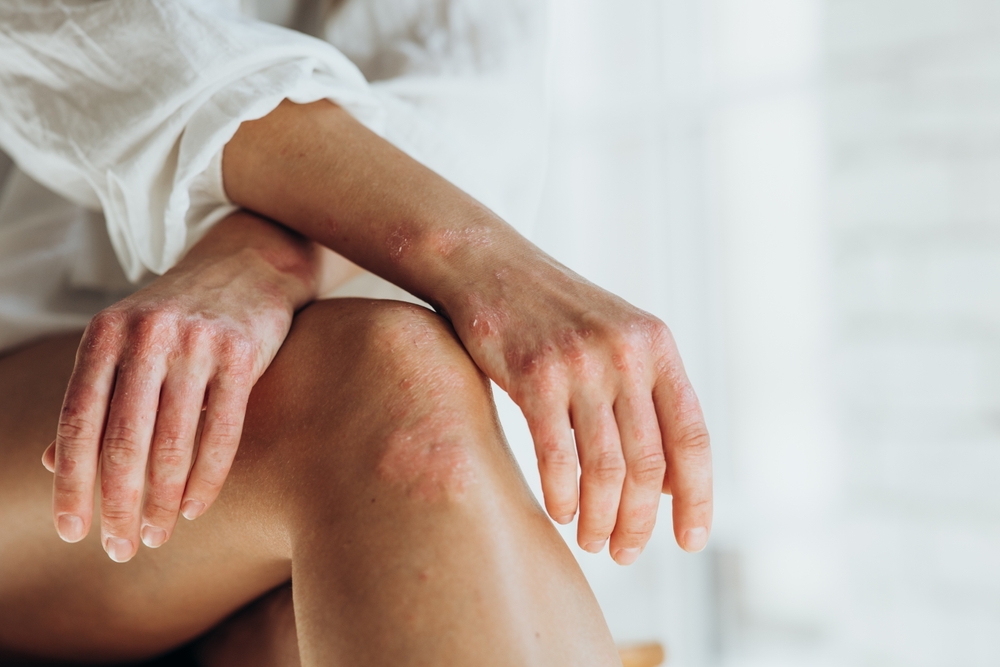
This rapid buildup leads to dry, scaly patches that can appear red on lighter skin tones or violet to dark brown on deeper skin tones. These patches most commonly show up on the scalp, elbows, and knees, though they can develop anywhere on the body. Along with visible patches, psoriasis often causes persistent itching, and in some cases, cracking, bleeding, or soreness in the affected areas.

Book An Appointment

Different Types of Psoriasis

The condition is classified into three types according to how much of your body is affected:

  • Mild cases, which affect less than 3% of your body
  • Moderate cases, which have affected 3% to 10% of your body
  • Severe cases, which have affected over 10% of your body

How Your Dermatologist Can Treat Psoriasis

Your dermatologist has several effective treatments to relieve the signs and symptoms of this condition. These include:

  • Prescription moisturizing creams, shampoos, or bath treatments.
  • Topical steroid treatments to reduce itching and slow the growth of skin cells
  • Light therapy using natural sunlight, lasers, or phototherapy to eliminate psoriasis patches
  • Prescription oral medications, including cyclosporine and methotrexate to reduce skin cell production and limit inflammation
  • Biologic drugs to suppress the immune system and reduce psoriasis breakouts

How You Can Manage Psoriasis Triggers

Several factors can trigger a flare-up. Avoiding these triggers can help you reduce the frequency of outbreaks. Common triggers include:

  • Stress
  • Illness
  • Skin injuries
  • Excessive sun exposure
  • Excessive cold or dry weather exposure
  • Smoking and drinking alcohol
  • Hormonal changes

Get Relief From Our Psoriasis Treatments

To learn more about the signs, symptoms, and our psoriasis treatment options, contact Dr. Flint, Dr. Dean, or Mark Pulver, PA at Millcreek Dermatology in Salt Lake City, UT. Dr. Flint has been practicing in Utah since 1996, making us one of the longest-standing dermatology practices in the state. Give us a call at 801-262-3600 to schedule your appointment.

Contact Us

Millcreek Dermatology

We Moved!

We are officially moved in to our new office!

Our new location is conveniently located close to our old location.

Our new address: 4252 S Highland Dr, Suite 200 Millcreek, UT 84124