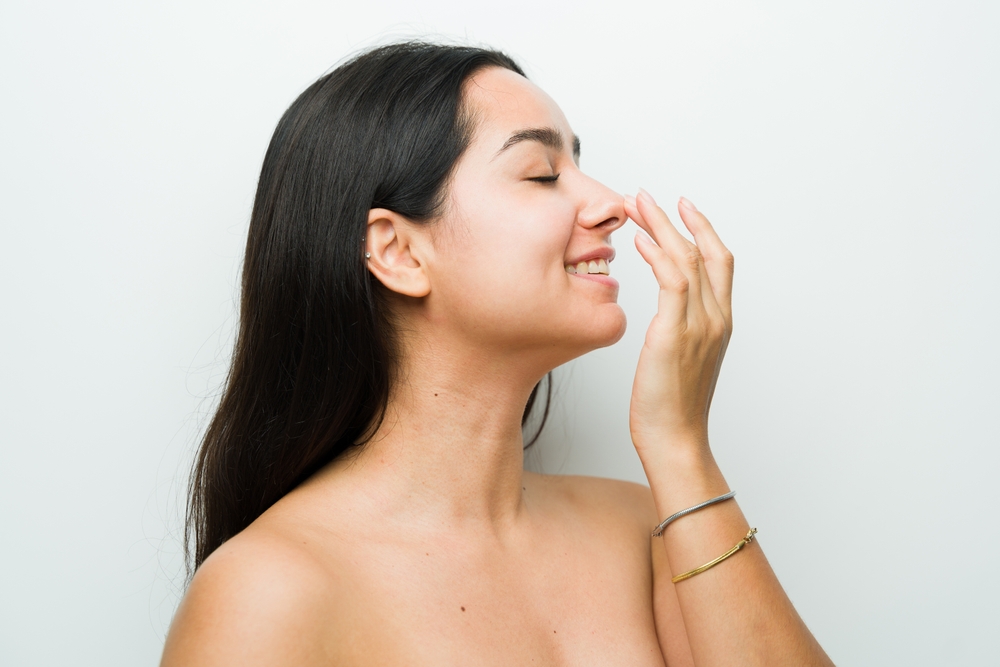
During Mohs surgery on your nose, you’ll receive local anesthesia for complete comfort while your surgeon removes thin layers of cancerous tissue one at a time. Between each removal, you’ll wait 30-45 minutes while laboratory technicians examine the tissue under a microscope. This process continues until all cancer cells are gone, typically taking 2-4 hours total, followed by immediate reconstruction of the surgical site.
Mohs micrographic surgery represents the gold standard for treating basal cell carcinomas and squamous cell carcinomas on the nose. With cure rates of 99% for primary tumors, this precise technique removes cancerous cells while preserving as much healthy tissue as possible, a critical advantage when treating the prominent, cosmetically sensitive nasal area.
Start Here: Your Mohs Surgery Journey
- Why Mohs surgery offers superior results for nasal skin cancer compared to standard surgery
- The step-by-step process of layer-by-layer tumor removal with immediate microscopic verification
- Reconstruction techniques that preserve both appearance and nasal function
- Realistic recovery timelines based on your specific procedure complexity
- Long-term surveillance strategies that catch new lesions early
Why Your Nose Needs Special Treatment (That Other Body Parts Don’t)
The nose presents unique challenges that make standard skin cancer surgery inadequate for optimal results. Its prominent facial position means cosmetic outcomes directly impact daily social interactions and self-confidence.
Limited tissue redundancy on the nose complicates reconstruction. Unlike the back or chest where ample surrounding skin allows generous margins, every millimeter matters on the nose. The complex three-dimensional structure requires surgical precision that preserves both form and function, removing too much tissue compromises nasal breathing and appearance.
Why Mohs Beats Standard Surgery for your Nose:
- Precision matters more here: Every millimeter of healthy tissue preserved impacts your final appearance. The nose’s limited skin availability means you cannot afford unnecessary tissue loss.
- You can’t afford blind cuts: Standard surgery removes predetermined margins without seeing what’s actually cancerous, often taking excessive healthy skin “just to be safe.”
- One shot at reconstruction: The nose’s limited tissue means you need maximum preservation for best results. Poor initial technique creates reconstruction challenges that become increasingly difficult to correct.
- Highest cure rates where they count most: According to the Skin Cancer Foundation, Mohs surgery achieves 99% cure rates for primary basal cell carcinoma and 95% for recurrent tumors, significantly higher than standard excision.
- Same-day certainty: Know your cancer is completely gone before leaving. Standard surgery requires waiting days for pathology reports, sometimes necessitating additional procedures.
These factors make Mohs surgery on nose procedures the clear choice when treating skin cancer in this delicate location.
The 5 Things You Must Know Before Your Mohs Surgery
These five elements determine your treatment success, recovery timeline, and final results. Understanding them now eliminates surprises later.
1. Who Benefits Most (Primary Candidates for Nasal Mohs Surgery)
Patients with basal cell or squamous cell carcinomas on the nose tend to have optimal outcomes, especially when tumors occur in cosmetically sensitive areas or are recurrent. The procedure also effectively treats less common skin cancers, such as dermatofibrosarcoma protuberans and Merkel cell carcinoma, when they occur on the nose.
2. What Makes it Different (The Microscopic Advantage)
Unlike standard skin cancer surgery that removes predetermined tissue amounts blindly, Mohs micrographic surgery examines 100% of surgical margins microscopically during your procedure. Your dermatological surgeon creates and personally reads pathology slides in real time, mapping the exact locations of cancer and ensuring complete removal of cancerous tissue.
3. Where it Happens (Specialized Surgical Environment)
Mohs procedures occur in specialized surgery centers equipped with on-site pathology labs. You’ll have a comfortable recovery area for waiting between stages, not a traditional operating room. This integrated approach allows immediate tissue analysis without sending samples to external laboratories.
4. When to Schedule (Optimal Timing for Treatment)
Most common skin cancers on the nose require treatment within 4-6 weeks of diagnosis. Earlier intervention means smaller tumors, less healthy tissue removal, and simpler reconstruction techniques, leading to better cosmetic outcomes.
5. Why Timing Matters (The Progression Factor)
Delayed treatment allows continued cancer growth, complicating both tumor removal and subsequent reconstruction. Early treatment of suspicious lesions improves the 5-year cure rate and reduces the prevalence of skin cancer recurrence compared to delayed intervention.
What Actually Happens During Your Mohs Surgery (Step-by-Step)
The systematic approach removes anxiety about the unknown. Here’s exactly what happens from arrival until you leave with your cancer completely removed. Most patients find the reality less intimidating than their imagination suggested.
Step 1: Local Anesthesia (Numbness without general anesthesia risks)
Your surgeon injects numbing medication containing lidocaine and epinephrine into the treatment area. You’ll feel a brief pinch during injection, then complete numbness develops within 5-10 minutes. The local anesthetic lasts 2-4 hours, you’ll feel no pain during tissue removal stages. This approach eliminates the risks of general anesthesia while providing complete comfort.
Step 2: First Layer Removal (Precise tissue mapping)
The surgeon removes a thin layer of tissue, including the visible tumor and a small margin of apparently healthy skin. They precisely map and mark the removed tissue to match your surgical site’s exact orientation. This meticulous tissue sample preparation takes about 15 minutes and enables accurate identification of any remaining high-risk cancer cells.
Step 3: The Waiting Period (Behind-the-scenes tissue analysis)
You’ll relax in a comfortable recovery area for 30-45 minutes while laboratory technicians prepare frozen sections of the removed tissue. They process microscopic slides using specialized staining techniques that highlight cancer cells. Your dermatological surgeon personally examines these pathology slides under high magnification. Bring a book, music, or simply rest during this interval.
Step 4: Results and Next Steps (Stage-by-stage precision)
Your surgeon reviews the pathology report and microscopic findings. If cancer cells remain at any margin, remove another thin tissue layer only from the specific area where the pathology slides showed positive margins. If all margins are clear of cancerous cells, tumor removal is complete. Research published in the Journal of the American Academy of Dermatology shows most primary nasal skin cancers require 1-2 stages total.
Step 5: Immediate Reconstruction (Same-day wound closure)
Once clear margins are confirmed through complete tissue analysis, reconstructive surgery begins immediately while local anesthesia remains effective. Your surgeon selects the most appropriate reconstruction technique based on your defect size, depth, and location. This immediate approach ensures optimal wound healing and cosmetic outcomes.
How many stages will YOUR surgery actually need?
No one can guarantee the exact number of stages before starting, but predictable patterns exist. Most primary basal cell and squamous cell carcinomas on the nose clear in one stage, approximately 75% of cases achieve complete removal during the first tissue examination.
Recurrent tumors, aggressive cancer subtypes, or poorly defined clinical borders typically require 2-3 stages. Previous radiation therapy or incomplete prior surgery creates scar tissue that obscures tumor margins, potentially necessitating additional stages for complete cancer eradication.
A first-time diagnosis with well-defined borders usually indicates that fewer stages are needed. Clear clinical margins, absence of high-risk pathological features, and no previous treatment history predict single-stage success. Conversely, recurrent skin cancer lesions generate fibrous scar tissue that makes distinguishing between healthy tissue and remaining tumor more challenging.
Reconstruction: How will your nose look after cancer removal?
Your final appearance depends on defect size, depth, and location, not just on surgical skill. Small defects often close with simple stitches, leaving minimal scarring along natural facial creases. Larger defects require local flaps or skin graft techniques for optimal restoration.
According to the Cleveland Clinic, approximately 95% of patients achieve good-to-excellent cosmetic outcomes when appropriate reconstruction techniques match the specific characteristics of their surgical defect.
For Small Defects (under 1cm):
- Simple primary closure using adjacent healthy skin with carefully placed sutures
- Minimal scarring positioned along natural skin creases and facial contour lines
- Geometric closure techniques distribute tension evenly for optimal wound healing
- Sutures typically remain 7-10 days before removal
For Medium Defects (1-2cm):
- Local flaps utilize adjacent nasal or cheek tissue for excellent color and texture matching
- Bilobed flaps work particularly well for nasal tip reconstruction, redistributing tension systematically
- Nasolabial flaps harvest tissue from the natural cheek fold adjacent to the nose
- These skin flap techniques preserve blood supply while moving tissue to cover defects
For Large Defects (over 2cm):
- Forehead flaps represent the gold standard for extensive nasal reconstruction requiring staged procedures
- Two-stage approach with connecting tissue bridge divided after 3-4 weeks of healing
- Full-thickness skin graft from behind the ear provides good color match when local tissue proves insufficient
- Composite grafts combining skin and cartilage reconstruct through-and-through defects involving structural support
Final cosmetic outcomes continue to improve over 6-12 months as surgical incisions mature, swelling completely resolves, and tissue remodeling optimizes scar appearance through natural healing processes.
Recovery Timeline: When can you actually return to normal life?
Forget generic “recovery takes time” advice. Here’s your actual timeline based on reconstruction complexity. Simple closures mean returning to work within days, while complex skin flap procedures require several weeks of activity restrictions.
Days 1-3 (Peak swelling phase): Expect maximum swelling and bruising around the surgical site. Apply ice for 10-15 minutes several times daily to reduce inflammation and post-surgical tenderness. Over-the-counter medications like acetaminophen or ibuprofen provide adequate pain control, prescription pain medication rarely becomes necessary. Keep the surgical site clean and dry, and avoid heavy lifting or strenuous activities that raise blood pressure.
Days 4-7 (Initial healing assessment): Swelling improves noticeably as the inflammatory response subsides. Your first follow-up appointment occurs during this period for wound assessment and possible suture removal. Light activities become acceptable while you continue gentle wound care with prescribed topical ointments. Sleep with your head elevated on extra pillows to minimize facial swelling.
Weeks 2-4 (Return to routine): Resume most normal daily activities while avoiding contact sports and activities risking direct facial trauma. Continue religiously applying broad-spectrum SPF 30+ sunscreen to healing tissue and swelling mostly resolves, though internal wound healing continues beneath the surface.
Weeks 4-6 (Full activity clearance): Resume complete activity levels including vigorous exercise and sports. Scars begin to mature, gradually fading and softening. Start gentle scar massage with moisturizing lotion if your surgeon recommends this technique. The surgical site now has sufficient strength to withstand normal daily stresses.
Months 3-12 (Final cosmetic emergence): Ultimate cosmetic outcomes emerge as scars fade through natural remodeling and tissue reorganization. Continued sun protection remains critical for preventing hyperpigmentation in healing areas. This extended maturation phase produces the final aesthetic result you’ll maintain over the long term.
Post-Surgery Care: The Dos and Don’ts Nobody Tells You
DO These Essential Things:
- Apply antibiotic ointment as directed, typically 2-3 times daily, to promote optimal wound healing
- Clean gently with mild soap and water during daily showering, patting the area dry carefully
- Sleep with your head elevated on 2-3 pillows during the first week to minimize swelling
- Use cold compresses for 10-15 minutes every few hours during the first 48 hours
- Wear SPF 30+ broad-spectrum sunscreen daily after initial healing completes (week 2 onward)
- Contact your surgeon immediately with any concerns about healing progression or infection signs
DON’T Make These Common Mistakes:
- Touch or pick at crusting on the surgical site, which disrupts natural healing processes
- Engage in strenuous exercise, heavy lifting, or activities raising blood pressure for 2 weeks minimum
- Expose healing tissue to direct sunlight without protection, risking permanent hyperpigmentation
- Use hydrogen peroxide or rubbing alcohol on wounds, as these damage healing cells
- Swim in pools, hot tubs, or natural water bodies for 2-3 weeks due to infection risk
- Ignore potential infection signs like increasing pain, expanding redness, or purulent drainage
These wound care protocols have a dramatic impact on your final cosmetic and functional results. Sun protection particularly matters because healing tissue remains vulnerable to permanent discoloration for months following reconstructive surgery.
When should you worry? Red Flags vs. Normal Healing
Normal Healing Signs You Should Expect:
- Mild swelling that peaks around days 2-3 then gradually subsides over the following week
- Bruising that transitions through color stages from purple to yellow-green before fading
- Light pink coloration at surgical incision sites, gradually returning to normal skin tone
- Mild tenderness or tightness in the reconstructed area during the first 1-2 weeks
- Small amounts of clear or light pink drainage during the first 24-48 hours
- Slight numbness that gradually improves over weeks to months as nerves regenerate
Warning Signs Requiring Immediate Contact With Your Surgeon:
- Pain that increases after day 3 rather than steadily improving with time
- Expanding redness, warmth, or swelling that worsens instead of gradually resolving
- Pus, thick yellow-green drainage, or foul-smelling discharge from the surgical site
- Fever exceeding 100.4°F, suggesting possible systemic infection
- Wound separation or opening along suture lines despite careful activity restrictions
- Excessive bleeding that doesn’t stop with 10 minutes of gentle, direct pressure
Trust your instincts about healing progression. When something feels wrong or differs significantly from your surgeon’s description of expected recovery, contact the surgery center promptly. Research in BMC Dermatology demonstrates that early intervention prevents minor complications from progressing to more serious problems requiring additional treatment.
Long-Term Success: Beyond the Initial Healing
Success extends far beyond suture removal and initial wound closure. Regular follow-up appointments monitor healing progression, detect potential complications early, and provide ongoing surveillance for new skin cancer lesions.
Your surveillance schedule: Week 1-2 appointments assess initial healing and allow suture removal if non-absorbable stitches were used. Week 6-8 visits evaluate complete healing, discuss long-term wound care strategies, and address any concerns about scar appearance or function. Month 6 checkups assess final scar maturation and overall healing quality. Annual full-body skin examinations starting at year one provide ongoing surveillance for new lesions or any signs of recurrence at the original treatment site.
Prevention and Ongoing Monitoring Essentials:
- Annual comprehensive skin examinations minimum, with more frequent visits for high-risk patients who have already developed skin cancer
- Monthly self-examinations checking for new suspicious lesions or changes in existing moles and spots
- Daily application of SPF 30+ broad-spectrum sunscreen on all exposed skin, regardless of weather conditions
- Protective clothing including wide-brimmed hats and long sleeves during extended sun exposure
- Avoiding peak sun intensity hours between 10am-2pm when ultraviolet radiation reaches maximum levels
- Prompt evaluation of any new or changing skin lesions rather than adopting a “wait and see” approach
Patients who have had one nonmelanoma skin cancer face significantly elevated risk for developing additional lesions during their lifetime. Regular surveillance by an experienced dermatological surgeon detects new cancers early, when treatment is simplest, least invasive, and most successful. Your ongoing commitment to sun protection and professional monitoring significantly impacts long-term outcomes and quality of life.
Stop Worrying, Start Healing: Your Mohs Surgery Roadmap
Mohs surgery on the nose offers the highest cure rates for basal cell and squamous cell carcinomas while preserving as much healthy tissue as possible for superior cosmetic outcomes. The combination of precise layer-by-layer cancer removal, immediate microscopic verification through on-site pathology slides, and specialized reconstruction techniques makes this approach the gold standard for nasal skin cancer treatment.
Understanding what happens during each stage, from local anesthetic administration through final reconstruction and wound healing, helps reduce anxiety and sets realistic expectations. With proper post-surgical care, diligent sun protection, and regular follow-up appointments, patients consistently achieve excellent long-term results with minimal risk of recurrence.
Ready to discuss your specific case and expected outcomes? Schedule a consultation with Millcreek Dermatology today to learn how Mohs surgery can provide the most effective treatment for your nasal skin cancer while achieving optimal cosmetic and functional results. Early intervention improves cure rates and simplifies reconstruction, don’t delay addressing suspicious skin lesions.
FAQs
How long does Mohs surgery on the nose typically take?
Most Mohs surgery procedures take 2-4 hours total, though timing varies based on how many stages your cancer requires. Each tissue removal takes about 15 minutes, followed by 30-45 minutes for microscopic examination. Simple one-stage cases may be completed within 2 hours, while complex tumors can take a full day.
Is Mohs surgery painful?
The procedure involves no pain because local anesthetic provides complete numbness throughout. You’ll feel a brief pinch during injection, similar to dental work, but no discomfort during surgery. Most patients experience mild tenderness for several days afterward, which is easily managed with over-the-counter medications. Prescription pain medication rarely becomes necessary.
How much does Mohs surgery cost?
Costs vary based on tumor size, stages required, reconstruction complexity, insurance coverage, and location. Many insurance plans cover Mohs surgery when medically necessary for treating basal cell and squamous cell carcinomas. Contact your insurance provider for specific coverage details. Millcreek Dermatology’s team provides cost estimates and works with your insurance to maximize coverage.
What is the success rate of Mohs surgery for nasal skin cancer?
According to the Skin Cancer Foundation, Mohs surgery achieves 99% cure rates for primary basal cell and squamous cell carcinomas on the nose, with 95% rates for recurrent tumors. These rates significantly exceed those for standard excision because Mohs examines 100% of the surgical margins microscopically during the procedure, ensuring complete cancer removal.
Can skin cancer come back after Mohs surgery?
While Mohs provides the highest cure rates, no treatment guarantees against recurrence. The comprehensive microscopic examination significantly minimizes this risk. Factors influencing recurrence include tumor type, size, and location. Patients who develop one skin cancer face increased risk for new lesions. Regular follow-up appointments and annual skin examinations help detect new cancers early when treatment remains most effective.