Baby acne appears as small facial bumps caused by maternal hormones between 2-6 weeks of age, while eczema shows up as intensely itchy, dry patches anywhere on the body, usually after 6 months. Baby acne clears on its own within months, but eczema requires ongoing moisturizing and trigger management.
Understanding these differences protects your baby from unnecessary treatments and ensures proper care. Baby acne needs minimal intervention, while eczema demands consistent skincare routines to prevent complications like bacterial infections and sleep disruption.
This guide helps you identify which condition affects your child, what treatments actually work, and when professional evaluation becomes necessary for your baby’s skin health.
The Five Facts Every Parent Should Know
- Baby acne stems from maternal hormones activating oil glands, creating temporary facial bumps that resolve naturally by 6 months.
- Eczema results from genetic skin barrier dysfunction combined with immune system irregularities, requiring long-term management strategies.
- Location patterns differ significantly: baby acne concentrates on facial areas while eczema appears anywhere, especially in skin folds.
- The presence of intense itching distinguishes eczema from painless baby acne, affecting sleep and daily comfort.
- Treatment approaches vary dramatically: baby acne needs gentle cleansing alone, while eczema requires consistent moisturizing and trigger avoidance.
The Quick Visual Guide: Spot the Difference in 30 Seconds
Baby Acne at a Glance
- Baby acne creates distinctive patterns that help identify this common skin condition:
- Location: Face only (cheeks, nose, forehead)
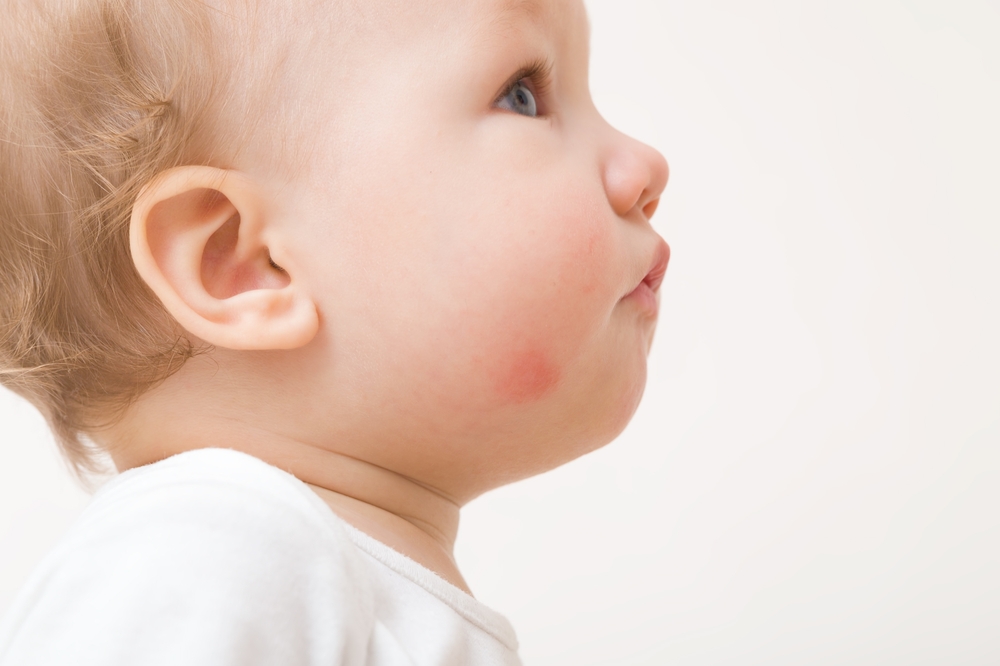
- Appearance: Small red bumps or white pimples resembling teenage acne
- Feel: Not itchy, doesn’t bother baby at all
- Timing: Emerges around 2-6 weeks old
- Duration: Clears naturally by 6 months
- These bumps worsen temporarily when babies cry or overheat, but they cause no discomfort.
Eczema at a Glance
- Atopic dermatitis presents completely different characteristics:
- Location: Anywhere on body – cheeks (infants), elbows/knees (older babies)
- Appearance: Dry, red, scaly patches with rough texture
- Feel: VERY itchy, causing constant scratching and rubbing
- Timing: Usually develops after 6 months (can appear earlier)
- Duration: Chronic condition with flare-ups requiring ongoing care
- The intense itching disrupts sleep and causes visible distress, unlike baby acne’s painless presentation.
Why does my baby have these bumps? About Baby Acne
The Real Culprit: Mom’s Hormones
Maternal hormones transfer from mother to baby during pregnancy, remaining active in your newborn’s system for several weeks after birth. These androgens stimulate oil glands in infant skin, particularly where glands concentrate most densely around facial areas.
The resulting increased oil production combines with naturally occurring skin bacteria and dead skin cells. This creates clogged pores that show up as small red bumps or white-headed pimples characteristic of neonatal acne.
This hormonal influence explains why baby acne resembles teenage acne. Both conditions result from androgen stimulation of oil glands, though the hormone source differs between maternal transfer and natural pubertal production.
What Baby Acne Actually Looks Like
Small red bumps and white pimples scatter across your baby’s cheeks, nose, and forehead. These bumps look like teenage acne but remain smaller and more superficial due to immature skin structure.
The condition appears most prominent when babies become fussy or cry. Heat and humidity temporarily worsen symptoms by increasing oil production and facial blood flow that highlights inflammatory areas.
Unlike adult acne, these bumps rarely develop blackheads and generally stay superficial without deep cystic formation that could cause scarring.
The Good News About Baby Acne
- Symptoms typically emerge between 2-6 weeks of age, coinciding with peak maternal hormone levels.
- The condition may worsens slightly before gradually improving. Complete resolution occurs in most cases by 4-6 months of age as hormone levels normalize and infant skin matures.
- This natural progression requires no intervention. The condition causes no discomfort to infants and doesn’t indicate poor hygiene or inadequate parental care.
Is it Eczema? The Signs You Shouldn’t Ignore
The Itch That Won’t Quit
The main difference separating eczema from baby acne lies in intense, persistent itching. This discomfort defines atopic dermatitis and creates the most significant impact on quality of life for affected children.
Babies show this discomfort through constant rubbing against bedding, furniture, or clothing. They appear fussy, have difficulty sleeping, and may cry more frequently than usual due to skin irritation.
Scratching worsens the condition by damaging the skin barrier. This creates openings for bacterial infections and keeps the inflammation going, making eczema so challenging to manage.
Where Eczema Shows Up on Your Baby
Eczema location patterns can change as babies grow.
Under 6 months:
- Cheeks and scalp (most common initial sites)
- Can spread to arms and legs
- Usually spares diaper area due to moisture retention
- Over 6 months:
- Moves to skin folds (elbows, knees)
- Affects wrists and ankles
- Appears behind ears
- These distribution patterns help distinguish atopic dermatitis from other infant skin conditions like seborrheic dermatitis or heat rash.
What triggers these flare-ups?
Family history plays the primary role in eczema development. Children inherit defective genes affecting skin barrier proteins, making skin more sensitive to irritants.
Environmental triggers interact with this inherited tendency to cause flare-ups. Common culprits include harsh laundry detergents, synthetic fabrics, dust mites, pet dander, certain food allergies, and temperature extremes.
The condition follows a chronic pattern with periods of improvement alternating with flare-ups. Understanding personal triggers becomes essential for long-term management and preventing severe episodes.
Common Eczema Triggers
- Harsh soaps and laundry detergents that strip natural oils
- Rough fabrics like wool and synthetics
- Dust mites and pet dander in home environments
- Certain foods including eggs, milk, and dairy products
- Temperature extremes and dry air conditions
- Stress, illness, and hormonal changes
What actually works? Treatment Approaches That Make Sense
Treating Baby Acne: Less Is More
Simple care produces the best results for neonatal acne:
- Gentle cleansing with warm water only – Once daily removes surface oils without irritation
- Pat dry with soft towel – Never rub or scrub affected areas
- Skip all acne products and harsh cleansers – These damage delicate infant skin
- Let it run its course naturally – Resolution occurs within months without intervention
Never use benzoyl peroxide, salicylic acid, or adult acne products on infant skin. These ingredients cause severe irritation and chemical burns on sensitive baby skin.
Focus instead on environmental modifications. Use fragrance-free laundry detergents, avoid fabric softeners, and choose soft cotton clothing that doesn’t rub against affected facial areas.
Managing Eczema: The Daily Routine That Helps
Consistent skincare routines manage eczema more effectively than inconsistent treatment:
- Moisturize 2-3 times daily – Use thick, fragrance-free products containing ceramides
- Bath time done right – Lukewarm water for 5-10 minutes maximum
- Apply cream within 3 minutes – Lock in moisture immediately after bathing
- Identify and avoid triggers – Keep a symptom diary tracking flare-ups
- Gentle fabrics only – Soft cotton clothing, avoiding wool or synthetics
Consistency matters more than product selection. Regular moisturizing routines prevent flare-ups more effectively than treating only when it flares up.
Prescription treatments including mild corticosteroid cream or calcineurin inhibitors become necessary for moderate to severe cases. Healthcare providers can recommend appropriate options based on your child’s specific symptoms and treatment response.
Products That Actually Help vs. Waste Your Money
For Baby Acne (save your money):
- Skip: All acne treatments, harsh soaps, exfoliating scrubs
- Use: Warm water and soft washcloths only
- For Eczema (worth investing in):
- Essential: Thick ceramide-rich cream, fragrance-free products
- Helpful: Gentle cleansers, hypoallergenic laundry detergent
- Maybe: Humidifier for dry climates, colloidal oatmeal baths
Avoid oily skincare products that could clog pores. Natural moisturizers like coconut oil may help some babies but can irritate eczema-prone skin in others, so test carefully before regular use.
Red Flags: When to Stop Googling and Call the Doctor
Baby Acne Warning Signs
Call your doctor when you notice:
- Symptoms persisting beyond 6 months of age
- Deep, painful cysts rather than superficial bumps
- Onset after 6 weeks suggesting infantile acne
- Fever accompanying skin lesions
- Pus-filled bumps or spreading bacterial infection
- Red streaks extending from affected areas
These symptoms could indicate conditions beyond typical neonatal acne requiring medical evaluation and possible treatment.
Eczema Red Flags
See a dermatologist if:
- No improvement after 2 weeks of consistent home care
- Honey-colored crusting indicating bacterial infection
- Oozing, bleeding, or severely inflamed patches
- Fever developing alongside rash symptoms
- Sleep disruption due to intense itching
- Rapid spreading despite appropriate treatment
- Significant impact on daily activities and development
Early professional intervention prevents complications including secondary infections and permanent skin changes.
Why Professional Help Actually Matters
Accurate diagnosis prevents inappropriate treatments that could worsen symptoms. Dermatologists distinguish between similar-appearing conditions including seborrheic dermatitis, contact dermatitis, erythema toxicum neonatorum (a harmless newborn rash), and fungal infections.
Access to prescription treatments provides more effective options for severe cases. Mild corticosteroid cream, medications that calm the immune system, and advanced topical treatments offer relief when over-the-counter products fail.
Working with a doctor helps prevent problems that could affect your child’s daily life throughout childhood. This approach addresses both immediate symptoms and prevention.
Conclusion: Trust Your Gut, But Know the Facts
Baby acne presents as painless facial bumps between 2-6 weeks, clearing naturally by 6 months without treatment.
Eczema causes intensely itchy, dry patches anywhere on the body after 6 months, requiring consistent moisturizing and trigger management. Most baby acne resolves independently with gentle cleansing alone, while atopic dermatitis needs ongoing medical attention.
When uncertainty exists about diagnosis or appropriate treatment, professional dermatological evaluation protects your child’s skin health. If you’re in the Salt Lake City area, Contact Millcreek Dermatology for an evaluation and treatment plan that works for your baby.
FAQs
How to get rid of baby acne?
Baby acne typically resolves on its own within 3-6 months without any treatment needed. Gentle cleansing with warm water once daily and avoiding harsh products allows natural healing. Never use adult acne treatments, as these can severely irritate sensitive skin. If symptoms persist beyond 6 months or worsen significantly, professional evaluation ensures appropriate care.
What causes baby acne?
Maternal hormones that transfer from mother to baby during pregnancy remain active in your newborn’s system for several weeks after birth. These androgens stimulate oil glands in infant skin, causing clogged pores similar to teenage acne. The condition represents normal hormonal adjustment as babies adapt to life outside the womb.
How long does baby acne last?
Most cases appear between 2-6 weeks of age and clear completely by 4-6 months. Some babies experience symptoms lasting until 12 months, particularly those with a family history of sensitive skin. The condition follows a predictable pattern, typically worsening slightly before gradual improvement occurs naturally.
What helps baby acne?
The best approach involves minimal intervention with gentle care. Cleanse affected areas with warm water only, pat dry softly, and avoid touching or scrubbing bumps. Use fragrance-free laundry detergents and soft cotton clothing to prevent irritation. Most importantly, allow time for natural resolution without applying harsh products or medications.
Does breast milk help baby acne?
While some parents report improvements applying breast milk to baby acne, no scientific evidence supports this practice as an effective treatment. The condition resolves naturally through hormones returning to normal regardless of topical applications. Simple warm water cleansing provides adequate care without risk of introducing additional irritants to sensitive skin.